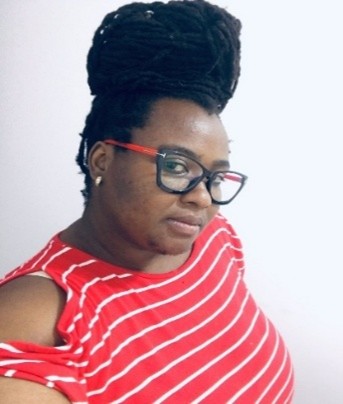
Under the FEF-IA project, Sandra is working on the research topic entitled: “Comparative Study of Conventional and FLASH Radiotherapy on inflammatory signalling, and downstream cellular responses: Improving data exploitation and analysis using AI.”
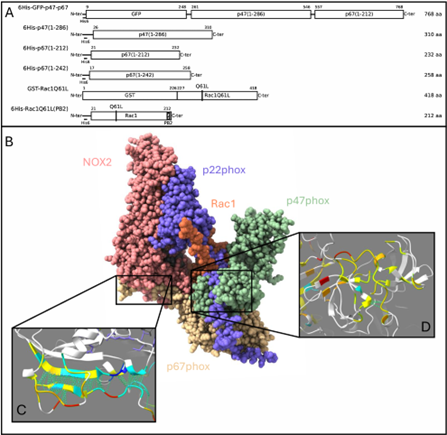
The primary objective of her study is to experimentally compare the effects of conventional radiotherapy and FLASH radiotherapy, particularly with respect to immune defences. It is well known that immune defences are the major problem encountered after radiotherapy. The evaluation of dose and dose rate, on NADPH oxidase deactivation and reactive oxygen species (ROS) generation in neutrophil membranes has to be better known before being used for the development and evaluation of AI-based predictive models, including machine learning classifiers and neural networks, aimed at predicting functional alteration or preservation of phagocytes following exposure to conventional or FLASH radiotherapy.
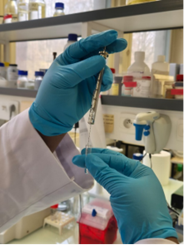
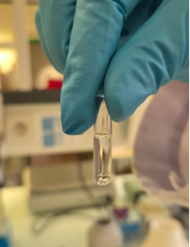
Sandra arrived at the Institut de Chimie Physique (ICP), Université Paris-Saclay, on 1 November 2025. Since her arrival, she has undertaken several experimental activities and begun to be trained in the use of ionising radiations. These include Fricke dosimetry, a well-established chemical dosimetry technique used to measure absorbed radiation dose and dose-rate based on radiation-induced chemical changes in an aqueous solution. This method relies on the oxidation of ferrous ions (Fe²⁺) to ferric ions (Fe³⁺) upon exposure to ionizing radiation.